
- Field data shows: inconsistent plug-in behaviour remains a key barrier to scalable Vehicle-to-Grid (V2G) services.
- Automated charging eliminates driver dependency and maximizes the connection time of electric vehicles (EVs) with the grid.
- Nissan and Easelink collaborate to leverage V2G potential by automating the EV – grid connection.
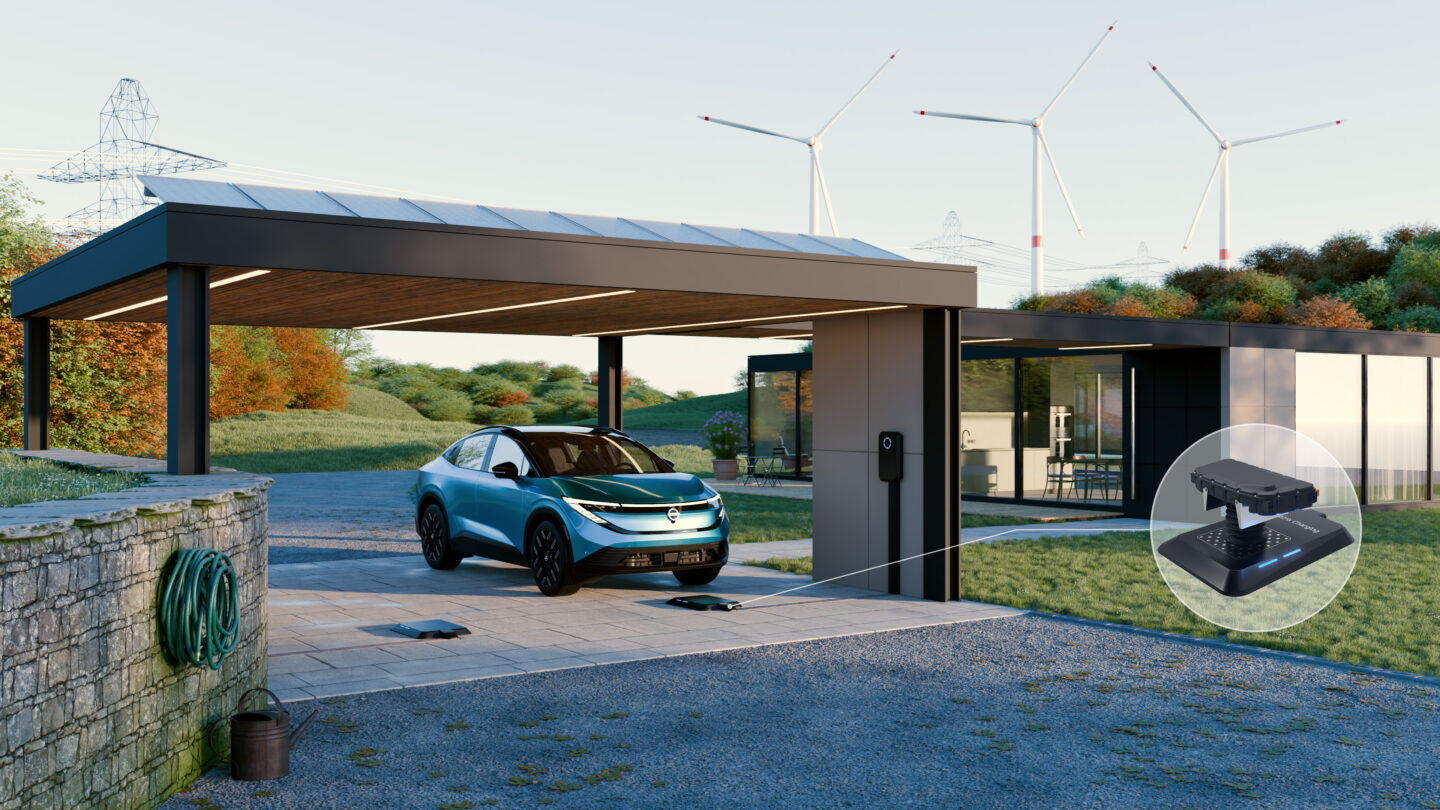
Engineers at Nissan Technical Centre Europe (NTCE) and Easelink are combining bidirectional AC charging with automated conductive charging technology in a UK-based research project that requires no driver interaction. Nissan’s experience from V2G deployments globally is combined with Easelink’s Matrix Charging® technology.
NTCE leads a £10 million Government-backed research project that will fundamentally change how electric vehicles are charged, powered and experienced. The recently announced Project SUITE (Smart Use of Integrated Technology for EVs – Press Release) will deliver a host of breakthrough technologies that will transform the EV ecosystem. One of them is a bidirectional Automated Charging Device (ACD), namely Matrix Charging from Easelink, for Vehicle-to-Grid connections in real world conditions, improving access to V2G charging and delivering hands-free accessibility of EV charging while maintaining a connection to the grid.
Inconsistent plug-in behaviour limits V2G – automated charging closes the gap
With more than 40 V2G projects deployed globally over the past decade, NTCE has accumulated substantial field data on the real-world barriers to grid integration. A consistent finding across deployments: the higher an EV state of charge, the less likely the driver is to plug in while parking. This behaviour creates unpredictable vehicle availability, limiting utilities and grid operators to rely on EV batteries as a responsive energy resource, particularly when grid demand peaks. Closing this gap requires removing the dependency on driver action entirely. An automated plug-in solution ensures that the vehicle connects to the grid whenever it is parked regardless of battery state and thereby transforming EVs into predictable and valuable grid-supporting energy assets. Analyses indicate that through the automation of the charging connection and the resulting near-continuous availability of the vehicles, the commercial returns from V2G participation can be drastically increased.